
A serum bottle can be accurate while the image around it makes an unsupported promise. A thick golden swirl suggests a different formula from a clear, fluid serum. A botanical beside the bottle may suggest an ingredient. Smoother skin in the next frame may look like a demonstrated result.
AI skincare product photography needs a visual-claims check alongside its packaging check. Before approving an image, ask what a shopper could reasonably conclude about the product, then compare that interpretation with what your brand can support.
This is a practical creative-production workflow, not legal advice or a compliance guarantee. The sources below concern the United States, United Kingdom and European Union; requirements depend on the market, product and placement. For the wider production process, see our AI product photography guide.
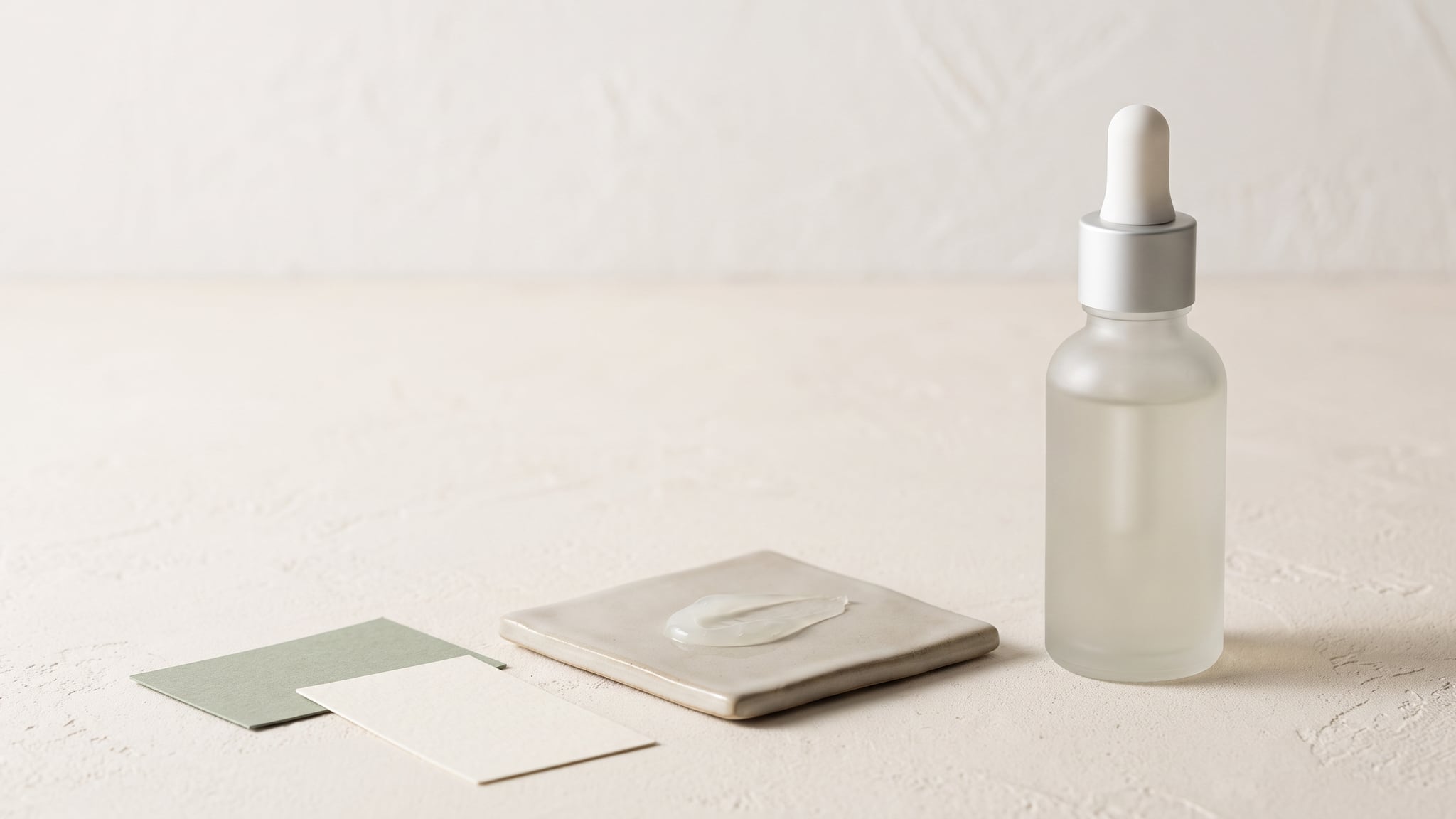
The cover is an AI-generated editorial illustration of an unlabeled serum bottle, translucent smear and neutral review swatches. It does not document a real formula, product test or result. All worked examples below are hypothetical.
Start with what the whole image communicates
Ask someone outside the creative team to finish this sentence: “After seeing this, I would expect the product to…” Let them describe the image before explaining your intention.
In the United States, the FTC's advertising guidance explains that words and pictures are considered in context, and that both explicit and implied claims require support. A useful production question follows: does the final composition communicate more than the approved headline?
Review three things together:
- The product: what it contains and how the formula appears
- The scene: what props, surfaces and people suggest
- The placement: the headline, caption, neighboring images and sequence
A droplet on a stone plinth can be decorative. The same droplet beside a skin close-up and a time-based hydration claim needs a different review. Avoid declaring individual props universally acceptable or unacceptable; record their meaning in the actual composition.
Repeat this check after cropping. A wide campaign scene and its tight social crop can place very different emphasis on the same details.
Build a reference pack for the formula as well as the bottle
A front packshot helps identify the product. It supplies little evidence about what comes out of its dispenser.
Before briefing a texture image, collect:
- The current product and packaging references for the correct variant
- Clear photographs of the actual dispensed formula
- A short real clip if flow, spreading or application matters
- The current ingredient information and approved claims wording
- The intended placement and the person responsible for reviewing claims
For the formula references, record the surface, lighting and whether the material was freshly dispensed or photographed later. Use a neutral capture alongside stylized photography so the reviewer can judge color and opacity without a strong lighting effect.
Keep appearance references separate from performance evidence. A photograph can help compare a cream's visible finish; it cannot establish a hydration duration or explain a biological effect. Ask the brand's product or claims owner for the relevant support rather than asking the creative team to infer it.
For the package itself, use our packaging and label accuracy workflow. The checks below cover the additional story told by the scene.
Check four visual cues before choosing a final image
1. Texture: does the depicted material match the product?
Compare the actual formula and candidate side by side. Look at color, transparency, bubbles, particles, sheen and the shape of a dispensed amount. A watery serum should not acquire a heavy cream peak because that shape looks more luxurious.
Be careful with motion language in a still-image brief. “Fast absorbing,” “silky slip” and “non-sticky” describe experiences that a polished smear alone cannot verify. If those qualities are part of the campaign, check the approved wording and supporting material separately.
When the generated texture keeps drifting, use a photograph of the real formula in an external composite or commission a dedicated texture shot. Match the surrounding scene to that photograph. Avoid stretching a real smear into a new shape merely to fill the layout.
2. Droplets: are you showing atmosphere or performance?
Water on a bottle, a wet countertop and liquid leaving a dropper serve different purposes. Identify which material each droplet represents.
For a product-dispensing image, compare the visible liquid and dispenser behavior with real references. For atmospheric water, review its relationship with the copy. Do the water, stopwatch graphic and skin close-up together suggest a measurable result that the brand has not approved?
A useful revision is often simpler styling: reduce the water effects, remove the timing cue, or keep the scene focused on the package. Adding more visual detail can create more questions without helping the shopper understand the product.
3. Ingredient props: what does the botanical imply?
Ask the product owner to confirm the relationship between every ingredient-like prop and the formula. A lemon, oat stalk or flower may be read as more than a color accent when placed prominently beside a cosmetic.
For the EU market, the non-binding technical document on cosmetic claims hosted by the European Commission cautions against attributing an ingredient's properties to a finished product that does not have them. Its practical relevance here is to check ingredient presence and claimed product benefit separately.
For a hypothetical citrus-themed serum image, verify what ingredient is actually present before selecting a fruit prop. Do not infer whole-fruit content, concentration or product performance from an ingredient name. If the connection is uncertain, use a neutral surface or an abstract color treatment and reassess the finished image.
4. Skin and results: does the image demonstrate an outcome?
An application scene can become an outcome claim when its next frame shows smoother, clearer or brighter skin. Review the sequence even when no frame is labeled “before” or “after.”
For UK non-broadcast advertising, ASA/CAP's before-and-after guidance calls for genuine, unmanipulated photographs and evidence supporting their conveyed effect. It also warns that an implied comparison can matter without explicit before-and-after labels.
Our production recommendation is to keep claimed outcomes tied to documented real material. Do not generate a skin improvement and present it as an observed result. Retain originals and capture details; have the appropriate claims reviewer assess the proposed comparison.
For US campaigns, the FDA distinguishes cosmetic appearance claims from claims affecting skin structure or function. Escalate therapeutic or cellular-repair concepts before turning them into a visual brief.
Choose a production route that fits the evidence
Use the least speculative route for the part of the image that carries the product information.
- Package in a new setting: retain the photographed product and generate surroundings if suitable. Review scene implications and packaging accuracy.
- Formula close-up: photograph the actual formula. Review its color, finish, surface and amount.
- Product being dispensed: use real dispensing references or footage. Check the liquid's identity and visible behavior.
- Result comparison: use documented original material with specialist review. Check authenticity, capture conditions and the supported effect.
- Abstract campaign concept: define its illustrative purpose. Review whether the final context still implies product facts.
You can explore restrained product-scene candidates in the Oxava studio using a reference-capable image model available there. Where the product or formula must remain photographic, generate a suitable background and combine the assets in an external editor. These are production options, not an automated claims-review feature.
A preservation instruction helps describe the brief, but it does not prove the output stayed unchanged. Inspect the selected image against its original references.
Use a short approval sheet
Record one row for each meaningful visual cue. Keep the sheet in your own document or asset-management system.
Clear liquid leaving a dropper
- Possible interpretation: this is the serum's appearance
- Reference: an actual dispensing photograph
- Decision and owner: compare the candidate with the product owner
Prominent botanical
- Possible interpretation: the product contains the depicted ingredient
- Support: current formula information
- Decision and owner: have the product owner confirm, revise or remove it
Smoother second portrait
- Possible interpretation: the product caused a visible improvement
- Support: original result material and relevant evidence
- Decision and owner: hold for the appropriate claims reviewer
These entries are hypothetical prompts for review, not legal determinations. Add the final filename, placement, caption, reviewer and decision date. “Looks premium” should never be the entire approval note.
Use three practical decisions:
- Proceed to normal approval: the depiction matches the documented facts and the reviewer has no unresolved question
- Revise: remove or change a cue that creates an unnecessary interpretation
- Hold: obtain missing references or specialist review before using the asset
For a larger catalog, attach this sheet to the asset record described in our SKU image quality-control guide.
Worked example: revise a hypothetical serum brief
Suppose a fictional brand supplies a packshot and a photograph of its clear serum. The initial brief asks for a golden swirl, citrus slices, a laboratory backdrop and a flawless face labeled “after.” None of those additions has supporting material in the brief.
The first response should be to resolve the gaps. Request the formula reference for the swirl, confirm the ingredient relationship and ask whether there is approved result evidence. Remove the outcome scene while that review is pending.
Laboratory styling also deserves attention. The US FTC's Health Products Compliance Guidance explains how scientific-looking imagery can imply scientific support. A clinical atmosphere should therefore be reviewed with the actual message rather than selected only because it looks trustworthy.
A narrower starting brief could read:
Use the supplied packshot to guide the same bottle and viewpoint. Create a quiet, neutral countertop scene with soft side lighting and space beside the product. Add no botanical props, laboratory equipment, skin portraits, result comparisons or new claims. Leave the formula detail for a separate photograph of the actual serum.
This is an untested example prompt. It does not guarantee product preservation or approval. If the candidate changes the bottle, retain the original pack photograph through an external composite. Check the final combination with the real texture photograph and intended caption before release.
Review the exported placement, not just the working file
Reopen the final export at the size a customer will see. Check that resizing has not obscured useful context, changed the apparent texture or separated qualifying text from the relevant image.
Review the product page and any carousel in order. A neutral portrait followed by a retouched portrait can create a comparison through sequencing. A crop approved for one caption should be reviewed again when paired with new benefit wording.
Do not treat an “AI-generated” label as evidence for a depicted result. UK ASA/CAP guidance on cosmetic production techniques addresses techniques that exaggerate the apparent effect of a product. Review what editing changes about the product's apparent performance, alongside any disclosure obligations for the placement.
Keep the final asset, its source references and the approved context together. Revisit the approval when the formula, claim wording or placement changes.
Frequently asked questions
Can I generate a serum texture from a bottle photo?
You can create a candidate, but the bottle photo does not establish the dispensed formula's appearance. Obtain real texture references and compare the output. Use an actual formula photograph when you need a dependable source for that detail.
Are water droplets always a hydration claim?
No. Their meaning depends on the full composition. Identify whether the droplets represent product, water or decoration, then review the nearby wording, skin imagery and timing cues.
Can I add ingredient props because they match the brand colors?
First check what the composition suggests about the formula. If a prominent prop creates an unsupported ingredient association, change it. Neutral objects and abstract color can provide styling alternatives, subject to the same final review.
Can an AI disclosure make a generated before-and-after usable?
A disclosure does not supply evidence that the shown improvement happened. Keep result claims tied to genuine supporting material and obtain appropriate market-specific review before publication.
Make the visual promise part of the brief
An accurate bottle is the starting point. Formula texture, props, skin imagery and neighboring copy determine what the finished asset asks the shopper to believe.
Open Oxava to explore a restrained scene with your approved product references. Bring real formula material and a clear claims boundary to the brief, then approve the final image in the context where customers will see it.
Oxava Team
Egemen Küpçü is the founder of Oxava, with 10+ years of hands-on experience in 3D and visual production. He writes about the craft of generating product, brand and campaign visuals with AI.
Related Articles
ALL POSTS


Subscribe to our newsletter
Be the first to hear about new techniques, model updates and ideas on AI generation.